
Finding My Voice as a Young Pakistani at PEOC 2026
Author:
M. Awais Shahid
1st Winner of Health and Nutrition Category, #YEAs Batch 2
Being a Young Elaeis Ambassador at my first major industry conference in Karachi I came there with curiosity and excitement and with numerous questions. I was interested to learn how the discussions on palm oil, sustainability, health and trade really happen when producers, policymakers, researchers and stakeholders find themselves in one room.
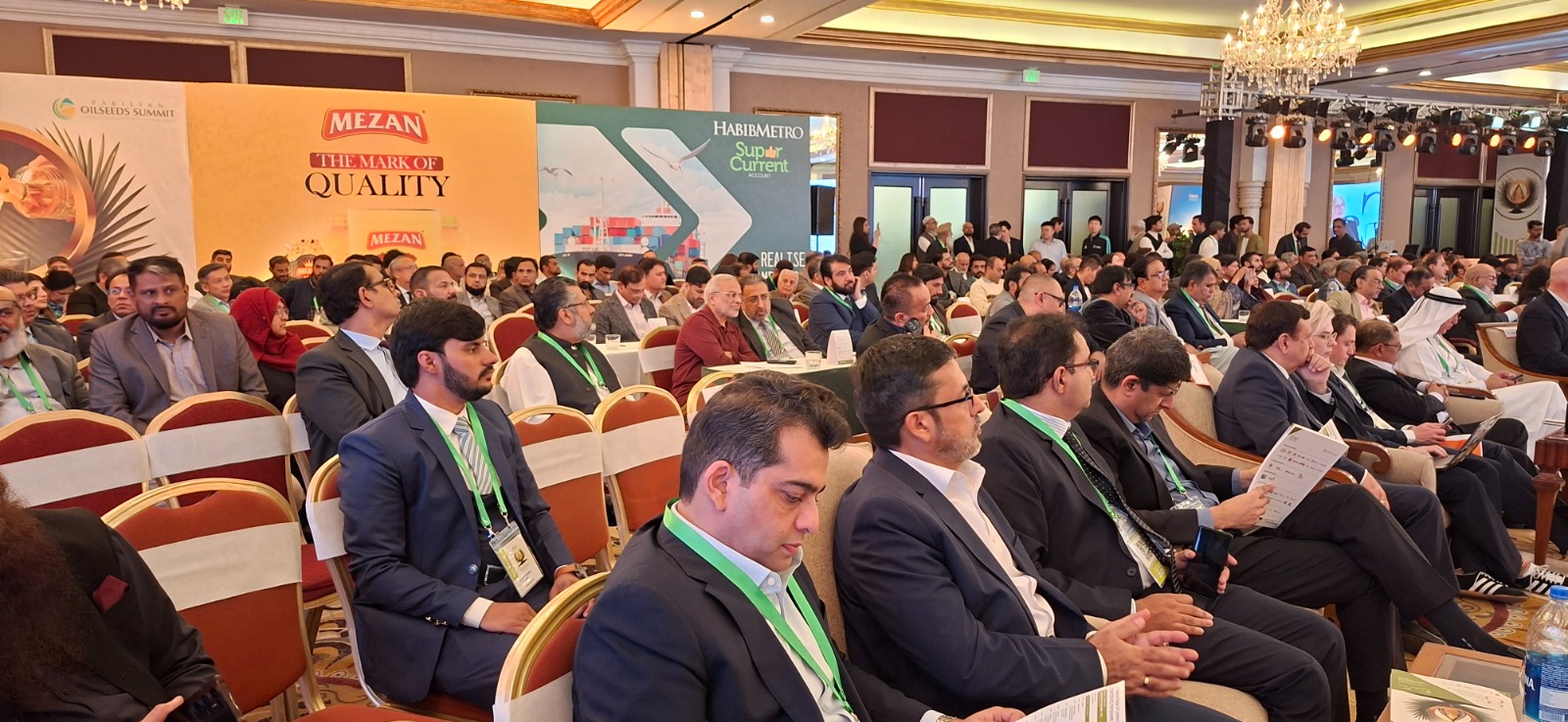
Within two days in 8th Pakistan Edible Oil Conference (PEOC) 2026, I realised that PEOC was not just a conference for me. It was the moment where I began to understand my voice, my responsibility and my role as a young Pakistani professional in the global palm oil conversation.
First Impressions and Expectations
Since the onset, I felt that this was not just a formal conference. The atmosphere was open, communicative and serious concerning the real issues of the world. Being a representative of Pakistan, a consuming nation, I was particularly fascinated with the ways in which the world discourse of palm oil fits into our national environment, food security, and realities.
My attendance at this conference provided me with the opportunity to see how various opinions collide, which is not always with the common opinion, yet always with a goal of communicating and understanding.
Day One: Introduction, Learning, and Perceiving the Bigger Picture
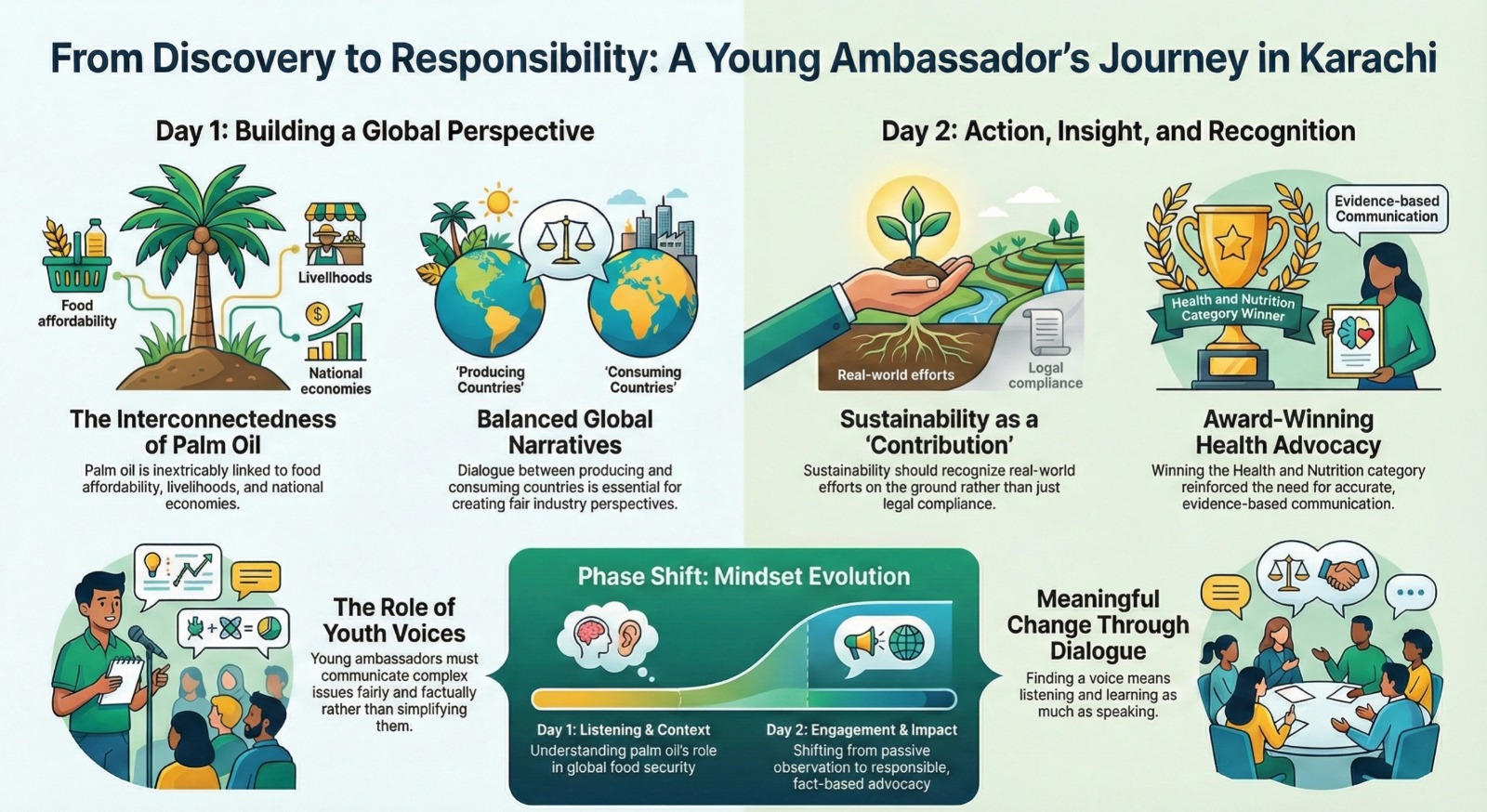
The introductory day of the conference was devoted to the setting of the context. The stakeholders of various backgrounds provided their opinions on the palm oil industry, world trade, sustainability issues, and policies. In my case, the first day was when I had to listen attentively and to internalize. Among the things that impressed me was the inter-relationship of the issues. It was discussed that palm oil is not just an agricultural or trade commodity, but also firmly connected with food affordability, livelihoods, as well as national economies. Being a young participant, this was one of the factors that made me realize that palm oil debates cannot be perceived in a vacuum. I got to know that communication between producing and consuming nations is crucial in creating balanced accounts. I also understood that the voice of youths like mine is also responsibility-based not to make people understand complicated matters but to convey them in a fair and objective way.
Day Two: Observation of a Deeper Understanding
The second day of the conference was more engaging and thought-provoking. Now I felt more at home in the surroundings and at ease following the discussions. The sessions assisted me to relate concepts in Day One with implications as regards to the practical aspects, more specifically to Pakistan.
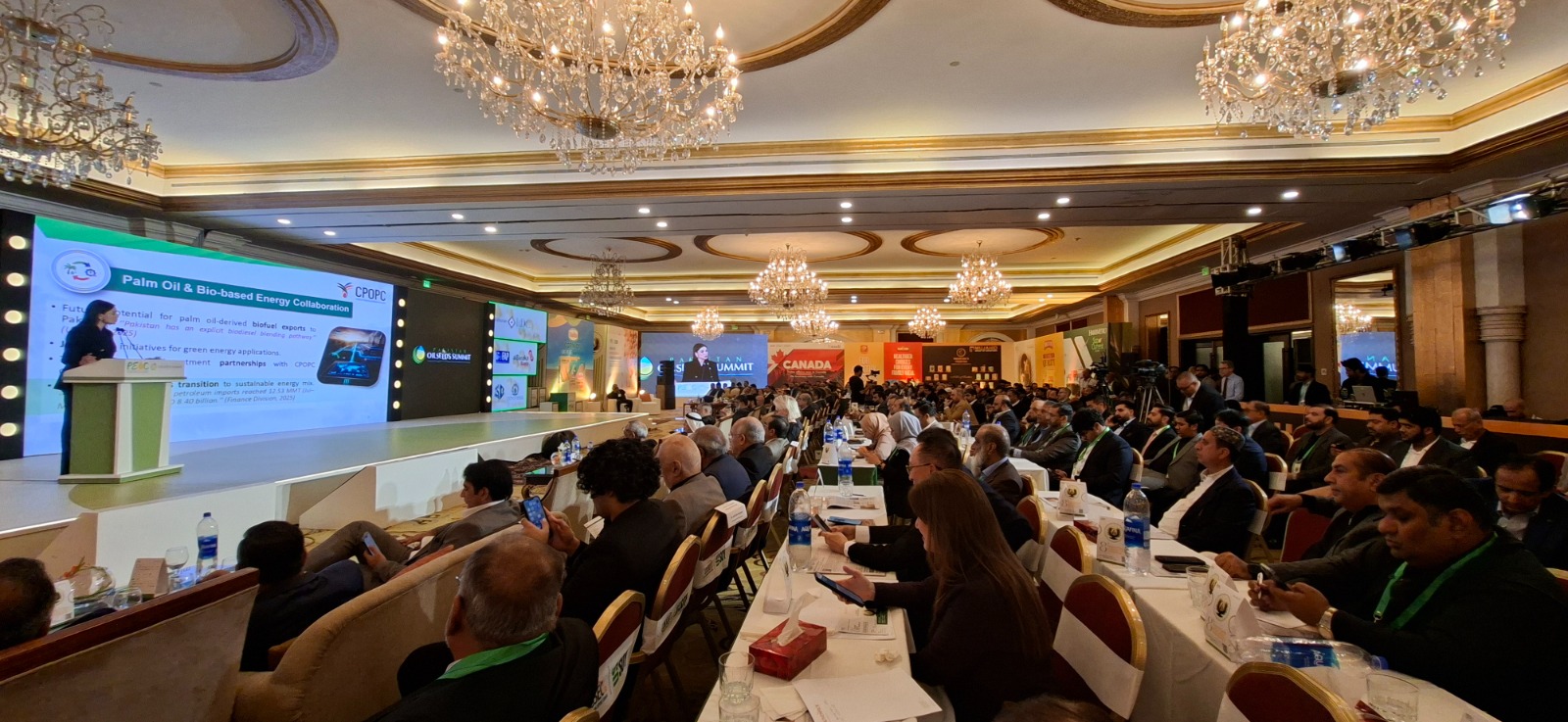
Leadership Learning Mdm. Izzana Salleh
One moment that stayed with me was listening to Mdm. Izzana Salleh who was the Secretary General of the Council of Palm Oil Producing Counties (CPOPC). She mentioned that food security, trade, and geopolitics have a close relationship, and they are getting more interconnected. She said that due to increasing demand of palm oil Pakistan is a strategic ally in establishing stable, resilient, and sustainable regional supply chains. Her view on how to shift a sustainability approach towards compliance to contribution is what struck me most of all. She stressed that sustainability must be able to appreciate real work on the ground and not rate countries solely on location or assumptions.
Her message was of particular interest to me as a Young Elaeis Ambassador of Pakistan. For the first time, I began to see palm oil not as a single issue of trade or sustainability, but as something deeply connected to Pakistan’s food security and regional stability. The discussion felt realistic and close to the ground after hearing how palm oil makes food affordable in Pakistan, and how it makes the livelihoods of the producing countries sustainable. It was a wake-up call to me that young people should have the vested responsibility of speaking facts, fair, and plainly and particularly on matters that directly impact on the daily lives of people.
Engagement and Stakeholder Interaction Learning
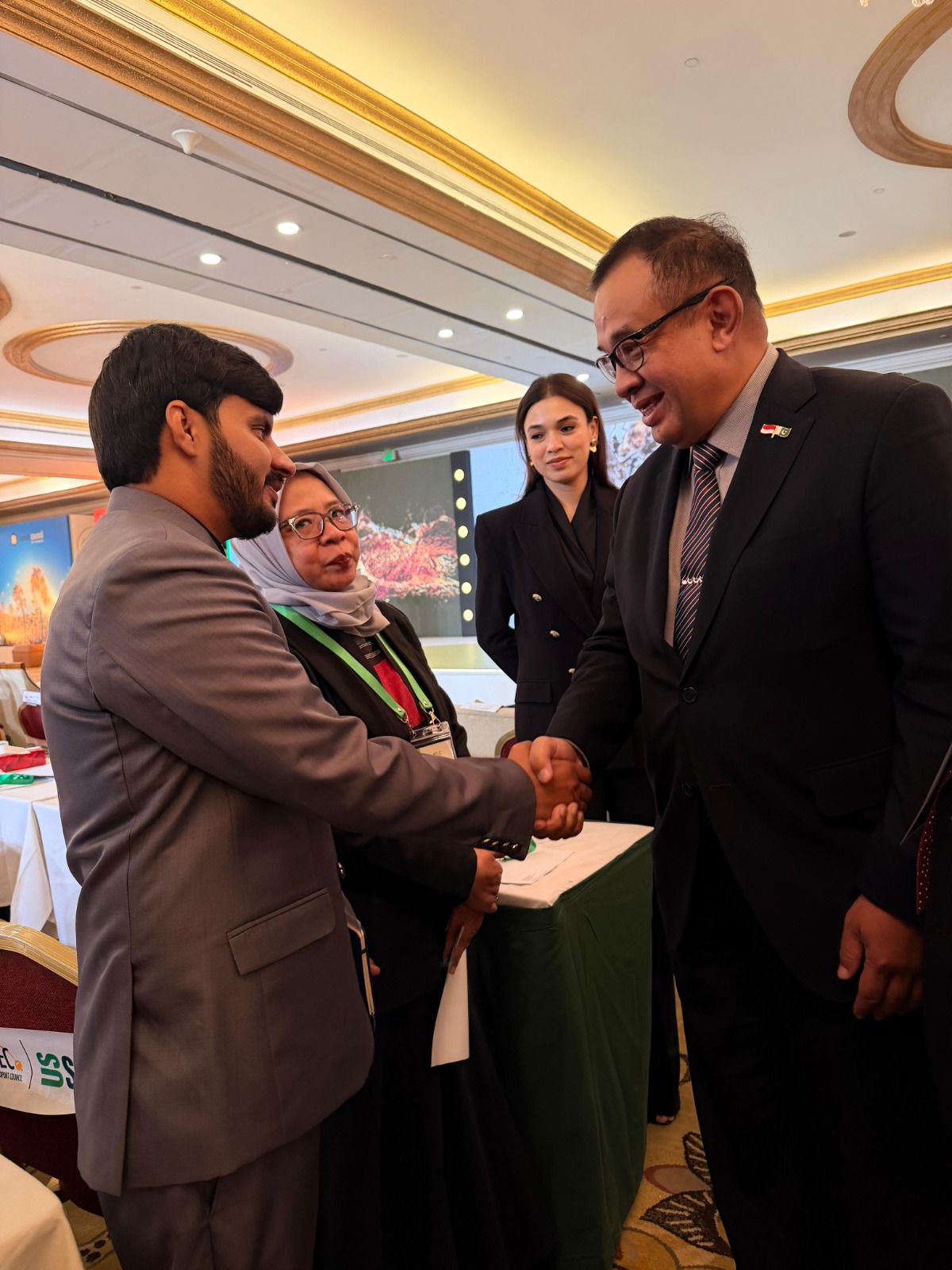
Another advantage is that I was able to interact more closely with stakeholders on Day Two. Mdm. Izzana Salleh, Secretary General of the Council of Palm Oil Producing Countries (CPOPC) and Bapak Antonius Yudi, Director of Sustainability and Smallholders, introduced me to major palm oil stakeholders in Pakistan, Indonesia and Malaysia. Through these introductions, I was able to know how the palm oil ecosystem is influenced by international dialogue and cooperation between the countries that produce and consume edible oils.
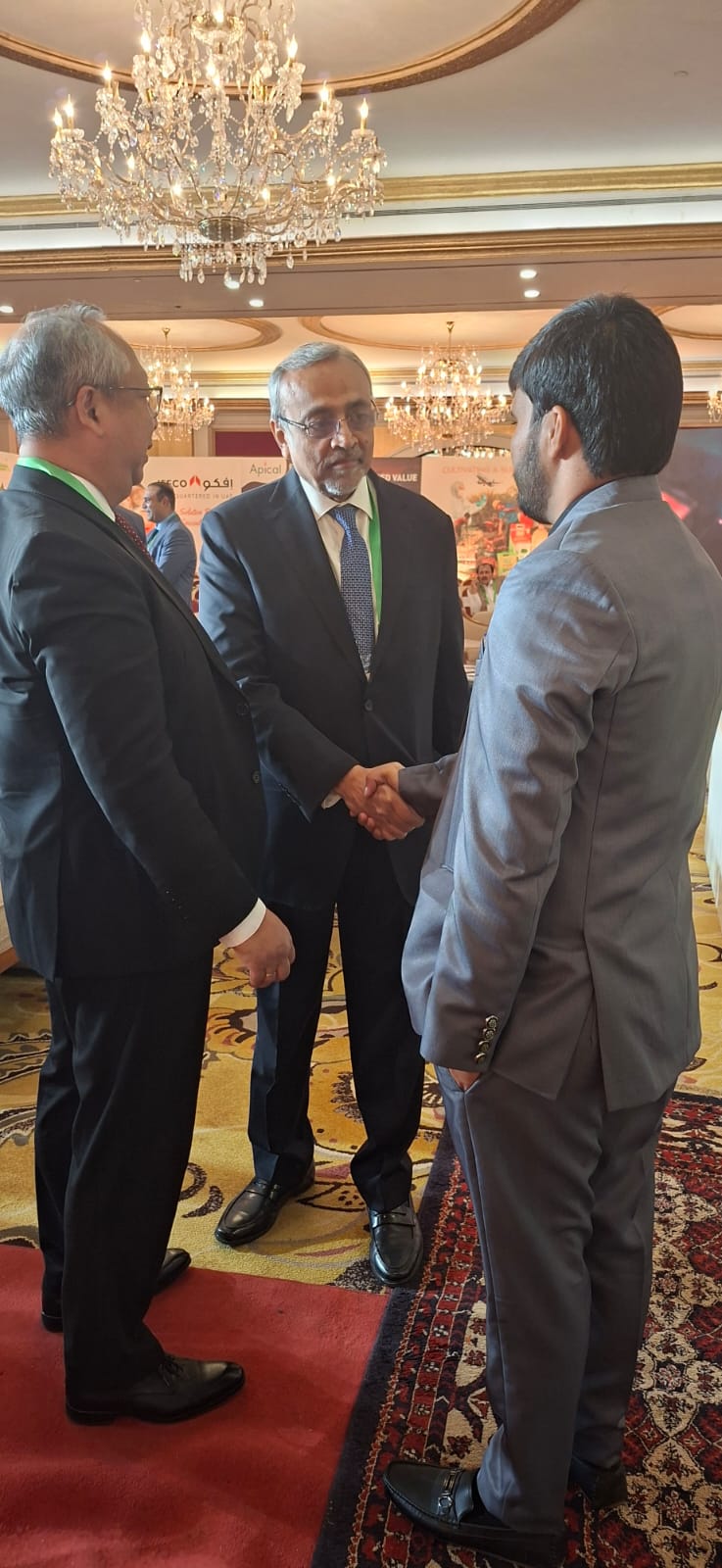
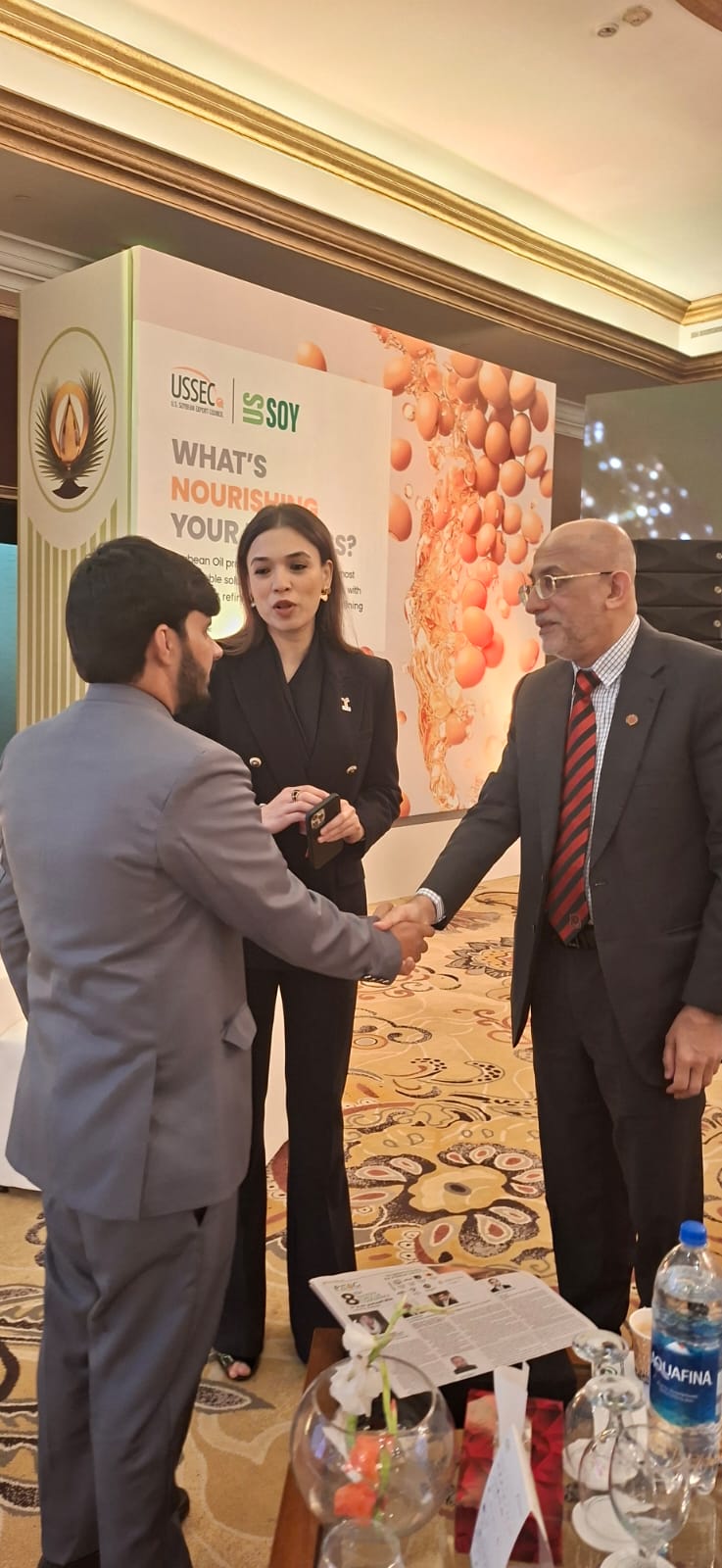
Specifically, I had a chance to meet with Mr. Abdul Rasheed Jan Mohammad, whom I consider the most valuable meeting, as the Chairman of the Pakistan Edible Oil Refiners Association (PEORA) and CEO of the Westbury Group. My short conversation with him, but full of insight, helped me have a better understanding of how the leadership in the industry and policy orientations intertwined to form the edible oil sector in Pakistan.
I also had the privilege to meet the Indonesian Ambassador of Pakistan, H.E. Chandra W Sukotjo, who gave me insights on how producing countries perceive Pakistan as not only a market, but a strategic partner in food security and trade in the long term.
My other key encounter was the one with the Director General of the Malaysian Palm Oil Board (MPOB) known as Dr. Parvez Ghulam Kadir. The interview with him also made me have a closer look at the role of research, regulation, and innovation in assisting in the production of palm oil in a sustainable manner and ensuring the reliability of supplies over the long term. Such snippets of interaction helped me to better understand how leadership, diplomacy, research institutions and regional co-operation all collide in the shaping of the edible oil sector in Pakistan.
These exchanges have expanded my knowledge of the palm oil ecosystem and have put me in a prominent position in the palm oil community of the region as a Young Elaeis Ambassador. What is more important, they demonstrated how dialogue, respectful interaction, and cooperation may open gates where the youth voices may be heard at the serious discussions on policy and industry. To me, it was an important lesson, that the important change should be achieved not only through speaking but also through listening.
A Moment of Recognition and Responsibility
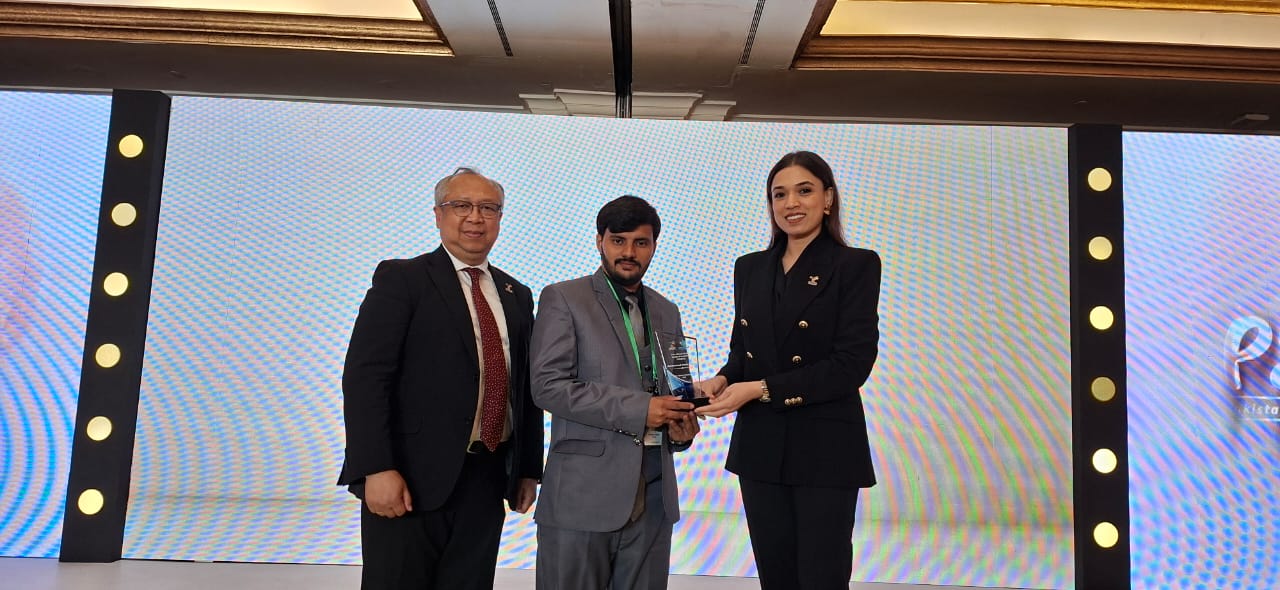
On the second day, I was fortunate to win the First Winner Award in the Health and Nutrition Category, as a Young Elaeis Ambassador (Batch 2). This was a humbling experience to me to get this recognition by Mdm. Izzana Salleh. Receiving the award was not something I had expected. Standing there, I felt proud but more than that, I felt the weight of responsibility. It reminded me that as a Young Elaeis Ambassador, my role is not to persuade loudly, but to communicate carefully, truthfully, and with balance. This experience made me keep on learning more, and to be careful when it comes to communication concerning the issues of health, nutrition, and sustainability, where the accuracy really counts.
Reflections as a Young Professional
In a nutshell, I returned from PEOC with more questions than answers but also with clarity. As a young Pakistani professional, my role is to listen carefully, speak responsibly, and bridge conversations between global discussions and local realities. That, to me, is the true responsibility of a Young Elaeis Ambassador.
Being in the profession of a young professional, I understood that expressing oneself does not mean talking the loudest. It implies honest and responsible listening, learning and communication. This conference made me understand that the input of the young people can be useful provided there is guidance based on facts, balance, and respect.
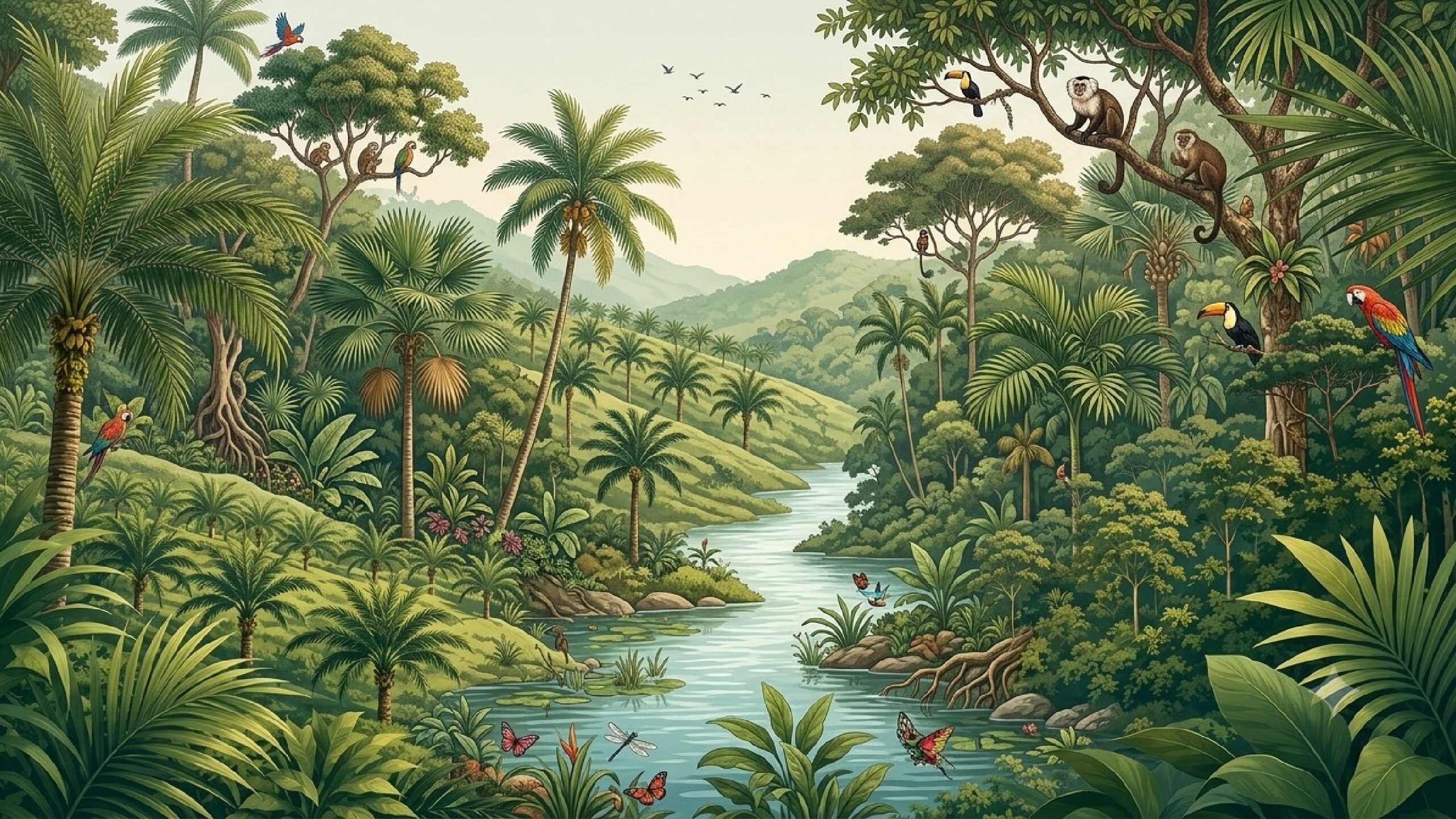
I have tried to capture my reflections from PEOC 2026 in the artwork below:
If this blog resonates with you or sparks any thoughts, I would be happy to continue the conversation. Please feel free to reach out to me on Instagram @theeduupdates or via email at theeduupdates@gmail.com.
Recent Blogs