
A Window for Collaboration: Turning the EUDR Delay into a Practical Partnership
The Council of Palm Oil Producing Countries (CPOPC) welcomes the European Union’s decision to postpone the full implementation of the EU Deforestation Regulation (EUDR) until December 2026, with micro and small operators given additional time until mid-2027. This extension responds to widespread concerns, raised not only by producing countries, but also by European operators, regarding readiness, administrative burden, and the risk of unintended trade disruption. However, time alone will not resolve implementation challenges unless it is matched by clearer guidance, transparent and predictable benchmarks, as well as sustained technical dialogue. The extension will indeed open a space for technical refinement, particularly as the European Commission prepares a simplification review between January and April 2026.
To support mutual understanding and to identify solutions and best practices to enable the smooth application of the EUDR, particularly in the palm oil, the Ad Hoc Joint Task Force (JTF) on the EUDR was established in June 2023. CPOPC facilitated its establishment and coordinated its progress between Indonesia, Malaysia and the EU. At its 2025 Ministerial Meeting, CPOPC Member Countries reaffirmed their collective commitment to constructively engage with the European Union, including support for the continuation of the Ad Hoc JTF. The collective commitment to continue the Ad Hoc JTF reflects a shared understanding: effective environmental regulation is best achieved through collaboration, technical realism, and mutual trust not through uncertainty or fragmented interpretation.
Progress on the Ground in Producing Countries
Contrary to perceptions that producing countries are unprepared, CPOPC Member Countries have been investing heavily in national systems to meet the EUDR’s requirements.
Indonesia, for example, is advancing regulatory guidance on geospatial data sharing through its national geospatial authority, ensuring traceability while safeguarding data governance. With regard to the mandatory sustainability scheme, the area of oil palm plantations that have been Indonesian Sustainable Palm Oil (ISPO)-certified has reached 5.8 million hectares.
Malaysia has established a high-level Special Committee on EUDR, co-chaired by key ministries, and is finalising a centralised traceability system that integrates polygon maps, national certification data, and legality verification as an initiative already shared directly with EU officials. With regard to its mandatory sustainability scheme, as of 31 August 2025, approximately 92% of Malaysia’s oil palm plantations, equivalent to 5.1 million hectares, are certified under the Malaysian Sustainable Palm Oil (MSPO) scheme, underscoring the industry’s commitment to internationally recognised sustainability standards. The MSPO scheme is Malaysia’s national sustainability standard covering the entire palm oil supply chain, including smallholders, estates, dealers, mills, and refiners.
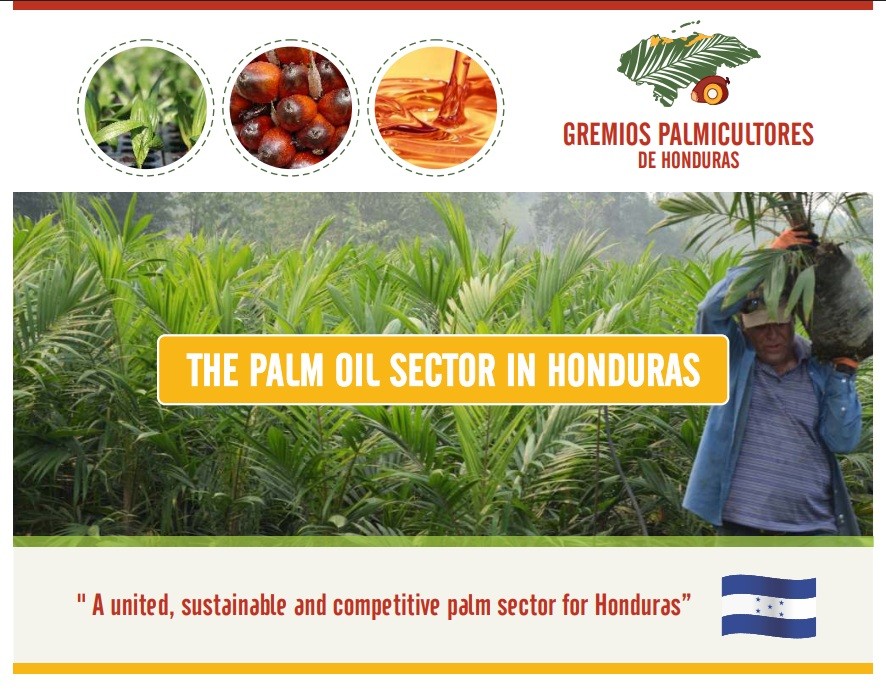
Honduras has completed a standardised roadmap for legal compliance and strengthened its forest monitoring information system. While Papua New Guinea, classified as a low-risk country under the EU’s benchmarking system, has requested CPOPC’s coordination support to ensure compliance readiness, particularly for palm oil alongside cocoa and coffee. The Democratic Republic of the Congo is working with an expert group from the EU and the EU delegation and is currently in a rather advanced phase.
These efforts demonstrate that producing countries are not against or resisting sustainability goals. They seek a sustainable framework that is doable, fair and takes the interests of both consuming and producing countries into account. Producing countries have invested, and will continue to invest, significant resources, institutional capacity, and political capital to align national systems with international framework and consumer’s expectations on sustainability. What is needed now is balanced alignment between EU framework and national systems to reduce uncertainty not only for producers, but also for European importers, traders, and downstream manufacturers.
Why the JTF Still Matters
The decision by CPOPC Member Countries to support the continuation of the Ad Hoc JTF reflects a pragmatic assessment: dialogue works when it is structured, technical, and sustained.
The JTF has become an essential platform and one of the few spaces where policy intent can be translated into implementable solutions. It allows regulators and producing countries to address real challenges such as data interoperability, smallholder inclusion, and benchmarking criteria away from politicised narratives. Maintaining this channel into 2026 is critical, particularly as the EU undertakes its simplification review and considers possible legislative or technical adjustments.
Ending dialogue at this stage would risk replacing cooperation with fragmentation and distrust, leaving uncertainty to be managed unilaterally by operators on both sides of the supply chain at a time when clarity and predictability are most needed.
Making the EUDR Work in Practice
To ensure the EUDR delivers environmental outcomes without undermining livelihoods or supply chains, CPOPC proposes several practical initiatives during the extended transition period.
First, we recommend the EU to use the simplification review to issue clear, operational guidance on due diligence requirements, acceptable risk-mitigation measures, and the use of national traceability systems. Complexity, rather than ambition, remains the primary obstacle to compliance.
Second, greater recognition must be given to credible national certification and legality frameworks that have been painstakingly achieved, such as Indonesia’s ISPO and Malaysia’s MSPO, particularly where these systems are being strengthened and aligned with EUDR objectives. Mutual recognition does not weaken standards; it reduces duplication, lowers compliance costs, and improves implementation outcomes.
Third, an improvement in the EUDR information system is critical to handle scale and diversity. Interoperability with producing-country databases, phased onboarding, and realistic data-submission requirements are essential to avoid system bottlenecks that could severely disrupt trade.
Fourth, we firmly believe that smallholder inclusion must move from principle to practice. This requires tailored timelines, technical assistance, and flexibility for group certification or landscape-based approaches without which millions of small farmers risk de facto exclusion from EU markets despite legal compliance and sustainable practices.
Finally, structured cooperation with international institutions, such as adapting existing forest assurance tools already applied in other commodities, can help bridge technical gaps and ensure consistency across sectors.
A Shared Responsibility
Sustainability regulations will only succeed if they are implementable, inclusive, and trusted by those expected to comply. The additional year before the EUDR’s full application should therefore be seen as a shared responsibility: for producing countries to complete their systems, and for the EU to refine its approach in line with on-the-ground realities.
CPOPC stands ready to work with European institutions, Member States, and stakeholders to turn this transition period into a genuine partnership. The continuation of the Ad Hoc JTF, coupled with practical simplification and mutual recognition, offers a pathway to ensure that the EUDR becomes not a barrier to trade but a collaborative model for a true global sustainability governance grounded in clarity, proportionality, and trust.
Izzana Salleh is the Secretary General of CPOPC.
Recent Pressroom