Match deforestation policy ambition with real implementation, says palm oil chief
Without clarity on the EUDR, producers ready to comply risk being left in regulatory limbo, warns CPOPC chief
As the European Union nears the final stretch in negotiations over the Deforestation Regulation (EUDR), producing countries gathered in Brussels for high-stakes talks with policymakers and industry stakeholders.
Against a backdrop of shifting timelines, the Council of Palm Oil Producing Countries (CPOPC) urged recognition of real-world gains in sustainable production and called for regulatory clarity that preserves both environmental ambition and smallholder livelihoods.
CPOPC Secretary General Izzana Salleh spoke with Euractiv about progress in Indonesia and Malaysia on curbing deforestation. Salleh sets out what producing countries need to ensure a fair and workable path forward under the revised EUDR.
EV: CPOPC recently concluded some intensive meetings with European policymakers and relevant stakeholders in Brussels. What were your key messages to them, and how do you feel that the European Commission is now more receptive to the concerns of producing countries?
IS: The CPOPC delegation conveyed three main messages that have been consistent throughout our engagement with the European institutions.
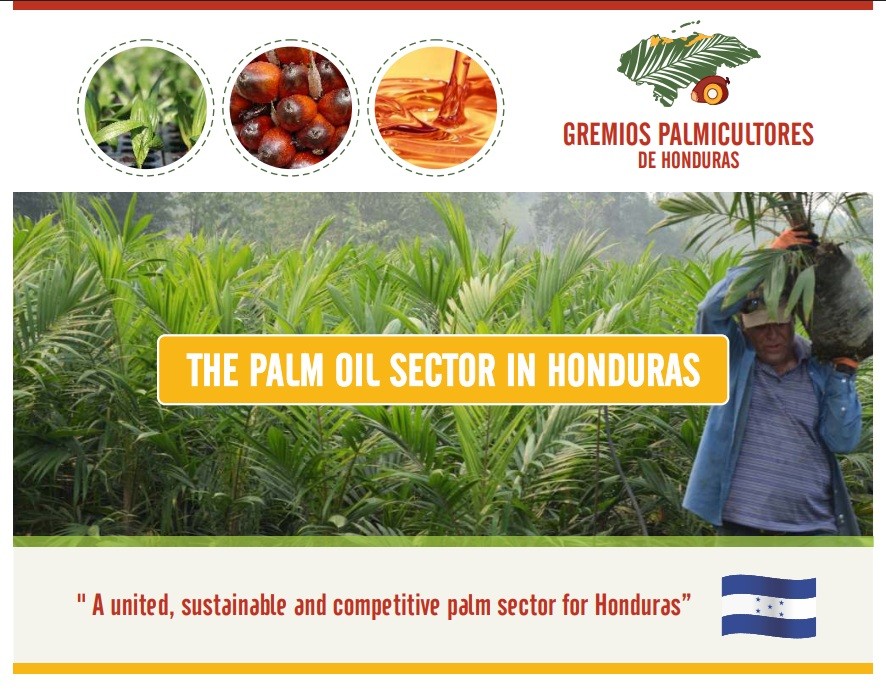
First, producing countries, especially Indonesia and Malaysia, remain fully committed to sustainable palm oil production, including biodiversity protection and stronger national certification systems. Members like Honduras, Papua New Guinea and the Democratic Republic of the Congo are also advancing responsible production. We continue to reduce deforestation and ensure companies invest meaningfully in sustainability.
Second, we stressed that smallholders are essential to the global palm oil value chain. If regulations unintentionally exclude them, they risk creating social inequity in communities where palm oil is a major driver of livelihoods and development. Environmental ambition and social fairness must advance together.
Third, we emphasised the need for practical implementation of the EUDR. Producers are ready to comply, but clarity, realistic timelines and simplified procedures are crucial to avoid unintended barriers. We fully support the regulation’s objectives, but implementation must be feasible.
Across meetings with DG ENV and TRADE, the dialogue was constructive. There is growing recognition that regulatory design needs to consider realities on the ground, and that solutions should be co-created.
Both the Commission and CPOPC see the Ad Hoc Joint Task Force as a vital platform for bridging expectations with practical challenges. We also sensed greater understanding that sustainability is stronger when producers and consumers work together.
EV: Calls to “stop the clock” on the EUDR have stirred debate. From your perspective, would a delay help create space for genuine dialogue and technical alignment, or does it risk deepening uncertainty for producers already moving towards compliance?
IS: What producing countries value most is certainty and a level playing field. A short, clearly defined adjustment period can be constructive if it helps resolve outstanding technical issues and ensures fair implementation across the supply chain. But an open-ended pause would leave farmers and companies in limbo.
Producers are largely ready for the EUDR, and many have already invested in compliance. The challenge lies with millions of smallholders across Asia, Latin America and Africa who still need support to digitise their production systems and understand the requirements. No sustainability policy is credible if it leaves these communities behind.
This is why we call for focused, solution-oriented dialogue. A limited testing phase and gradual entry for smallholders would allow both sides to identify gaps and refine procedures without disrupting trade. Establishing a Community of Practice that brings all stakeholders together would also be helpful. The aim is not to delay for its own sake but to ensure that implementation becomes an opportunity rather than a barrier.
EV: If there is no political agreement before the regulation’s enforcement, what would that mean in practice for palm oil exporters – especially for those who have already invested to meet EUDR requirements?
IS: Without political agreement, operators would still be expected to meet full compliance from day one, even though several technical issues remain unresolved. This creates uncertainty for companies that have acted in good faith, risking market disruptions, different interpretations by national authorities and increased compliance costs. It would also likely push prices higher for consumers.
Producers, therefore, continue to advocate for a reasonable transition pathway. A phased testing period, clearer guidance and interoperability between EU and national traceability systems would help maintain environmental ambition while ensuring fairness. Ambition must be matched with practicality to avoid penalising those already aligned with the regulation.
EV: Data shows that deforestation in Malaysia and Indonesia is declining, yet this progress is often overlooked in European discussions. What concrete evidence do you want Brussels to recognise, and how might that change the EU’s approach to risk assessment?
IS: The evidence is clear: Indonesia’s primary forest loss fell by around 11 per cent in 2024, and Malaysia recorded a 13 per cent decline and moved out of the global top ten for tropical primary forest loss.
These are significant improvements in a year when global forest loss increased elsewhere. They reflect stronger national governance, including Indonesia’s FOLU Net Sink 2030 plan and Malaysia’s stricter MSPO 2.0 standard, which now covers over 86 per cent of planted area. ISPO coverage in Indonesia also continues to expand.
These jurisdiction-wide systems materially reduce risk. Recognising this progress would allow the EU’s benchmarking under the EUDR to evolve in line with the data. Lower risk classifications, proportionate checks and clearer pathways for smallholders would follow. It would also signal that credible, government-operated traceability and certification frameworks can play a legitimate role in risk mitigation.
The overall trajectory in producing countries is positive and well documented. Aligning the EU’s assessment with this progress would maintain environmental ambition while making implementation more workable and inclusive.
EV: Could you share one or two “good stories”, particularly involving smallholders and sustainable practices, that best illustrate how palm oil contributes positively to rural livelihoods and environmental stewardship?
IS: There are countless examples of how palm oil supports social development and environmental stewardship. Rather than highlight only one or two, we encourage people to explore our publication Our Stories, Our Lives, Our Future, which compiles 25 real accounts from 15 countries. They show how smallholders, women leaders, youth groups and local cooperatives are improving income stability, adopting climate-smart practices, restoring habitats and strengthening community resilience.
EV: How do you see existing national certification schemes fitting into the EUDR framework? Is there scope for mutual recognition or a joint verification mechanism between producing and consuming countries?
IS: National schemes such as MSPO and ISPO already contain many of the elements required under the EUDR. They are government-mandated, audited by accredited bodies and verify legality, environmental protection, labour conditions and community rights. Much of this information aligns with what EU operators must demonstrate under their due diligence requirements.
Given this overlap, these schemes should be recognised as credible sources of verified information under Article 10 of the EUDR. This would not replace due diligence but would provide confidence to operators, reduce perceived risk and support more proportionate implementation, particularly for smallholder-inclusive supply chains.
Several other CPOPC members are also strengthening their national sustainability frameworks, which could be aligned within this cooperative approach.
EV: Finally, after your high-level engagements in Brussels, what tangible outcomes or next steps would you like to see – and what message are you taking back to CPOPC members about Europe’s willingness to work towards common solutions?
IS: Our meetings showed that there is genuine space for constructive cooperation, provided that the realities of producing countries are fully understood. The most urgent next step is a clear and timely decision from the Commission and co-legislators on the EUDR. We need certainty and stability. This matters not only for European operators but for producers and smallholders in Indonesia, Malaysia and elsewhere.
We also expect continued technical engagement through the Ad Hoc Joint Task Force, which has proven to be an effective bridge between regulatory expectations and ground-level implementation. Structured dialogue is essential to avoid unintended consequences, especially for smallholders.
The message we bring back to our members is cautiously optimistic: Europe is listening more closely, and there is stronger recognition that workable solutions must be co-created. But engagement must now translate into concrete action.
Our members will continue to engage in good faith, while firmly advocating that sustainability must not be approached through a single lens. Protecting people and the planet must advance together; they are not competing objectives but complementary responsibilities.
Recent Pressroom