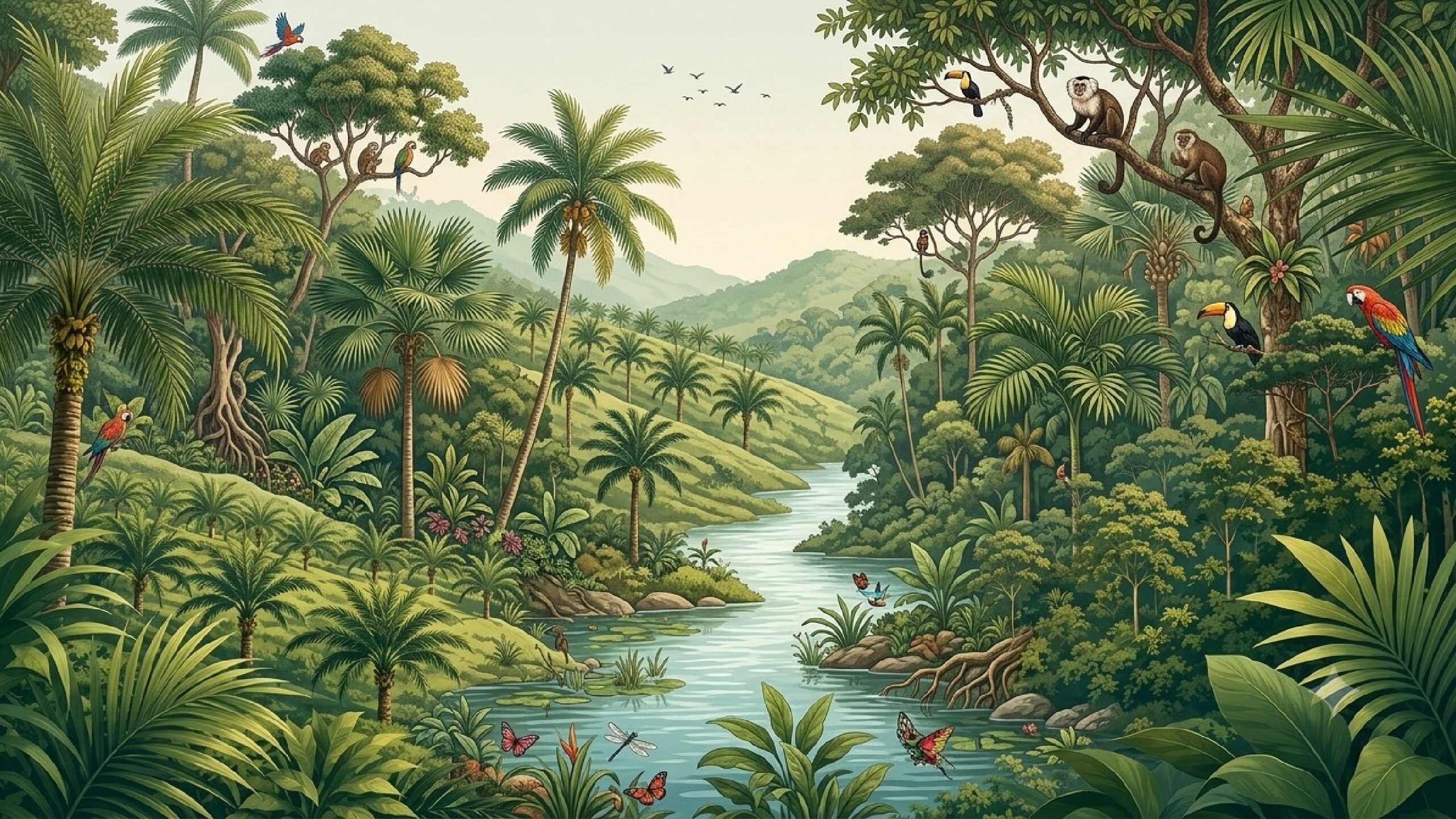
Palm Oil and Nature Conservation: Producing More, Protecting More
On World Nature Conservation Day, one lesson is becoming increasingly clear: protecting nature is not simply about producing less – it is about producing more with less. Sustainable palm oil demonstrates how agricultural productivity and environmental conservation can reinforce one another, helping feed a growing global population while reducing pressure on land and ecosystems.
Key Messages:
1. More oil from less land, more space for nature: oil palm produces 2.4 times more oil per hectare than soybean and 2.1 times more than rapeseed. Replacing it could require an additional 68 million hectares by 2050.
2. Conservation is already in action across producing countries: from Indonesia and Malaysia to Colombia and Guatemala, productivity, habitat restoration and biodiversity protection are advancing together.
3. Sustainable palm oil does more than prevent harm, it delivers results: higher yields, less pressure on forests, restored ecosystems and more secure livelihoods for smallholders.
More Food from Less Land
Palm oil’s strongest conservation advantage begins with a simple fact: it delivers more oil from less land. The Comparative Study on the Sustainability of Vegetable Oils, published by Wageningen University & Research, found that, when co-products and by-products are included, oil palm yields around 2.4 times as much per hectare as soybean and 2.1 times as much as rapeseed. Even ambitious productivity gains in competing crops would not close this gap.
As global demand for vegetable oils rises, this yield advantage becomes decisive at landscape scale. Research published in Global Change Biology estimates that producing the edible oils needed in 2050 could require approximately 317 million hectares. Replacing palm oil entirely with alternatives could push that figure to 385 million – an additional 68 million hectares, an area larger than France.
The implication for conservation is straightforward: replacing palm oil does not remove pressure on land – it can intensify it. By producing more oil from existing plantations, sustainable palm oil can limit agricultural expansion and help protect forests and other valuable ecosystems. Land-use efficiency is therefore not simply an agricultural advantage; it is one of the most effective tools available for protecting nature while feeding a growing population.
Conservation in Action: Palm Oil-Producing Countries Lead the Way
Some of the most significant examples of palm oil-supported nature conservation come from major producing countries, where initiatives range from province-wide forest governance and habitat restoration to biodiversity management and smallholder support.
In Indonesia, the world’s largest palm oil producer, Aceh illustrates the potential of a landscape-wide approach. The province contains most of the 2.8-million-hectare Leuser Ecosystem, while palm oil is its largest contributor to regional GDP and more than half of its plantation area is managed by smallholders. A partnership involving government, businesses and civil society has restored 10,000 hectares through natural regeneration and agroforestry, supported certification for 2,800 smallholders and increased productivity by up to 50%. Annual palm oil-driven deforestation in Aceh Tamiang and Aceh Timur also fell from 330 hectares in 2019 to 35 in 2023. The results suggest that forest protection is most effective when restoration, monitoring and smallholder productivity are addressed together.
In Malaysia, Sabah combines large-scale palm oil production with exceptional biodiversity. In Lower Kawag, an area of the Ulu Segama-Malua Forest Reserve degraded by decades of logging and fires, a ten-year programme is working to restore 2,500 hectares of orangutan habitat. Local women have produced around 80,000 native saplings in community nurseries, while restoration work has so far covered 225 hectares. The project combines native tree planting with firebreaks, habitat recovery and additional income for participating communities, showing how industry funding, public forestry expertise and local knowledge can support long-term ecological restoration.
In Colombia, the focus is on integrating biodiversity into the management of productive landscapes. A 2026 biodiversity guide documented 745 bird species across the country’s four palm-growing regions – 38% of all species recorded nationally. It also translates this evidence into seven practical measures, including protecting forest fragments, restoring riverbanks and creating biological corridors. The guide therefore turns biodiversity protection from a general commitment into specific actions that producers can implement and monitor.
In Guatemala, restoration is taking place across the La Pasión River basin, one of the country’s three largest and a source of water and livelihoods for 65 communities. A multi-stakeholder platform involving producers, public institutions, environmental organisations and local communities aims to restore 210 hectares of riverbanks, with the first 70 hectares already being replanted with native species. Beyond reducing erosion and flood risks, the project is rebuilding part of the Mesoamerican Biological Corridor. Its wider significance lies in the governance model: progress is coordinated through a locally recognised platform and monitored through satellite verification, creating a framework that could be replicated in other watersheds.
These place-based projects are complemented by cross-regional initiatives addressing a structural challenge: helping smallholders improve yields without expanding cultivated land. The Good Agricultural Practices Training series reached farmers across Africa and Southeast Asia during 2025 and 2026, while the International Smallholders Workshop 2025 brought producers from Africa, Asia and Latin America together to examine replanting and persistent yield gaps. Together, these initiatives spread practical knowledge, strengthen farm productivity and support smallholders’ inclusion in deforestation-free supply chains.
Productivity and Biodiversity Can Grow Together
World Nature Conservation Day should encourage a shift in perspective. The challenge is not to choose between agricultural production and environmental protection, but to make both objectives reinforce one another.
Evidence from palm oil-producing countries shows that higher productivity, responsible land management, ecosystem restoration and smallholder support can make agriculture part of the conservation solution.
Sustainable palm oil should therefore be assessed not only by the harm it avoids, but also by the outcomes it delivers: higher yields, restored ecosystems, protected biodiversity and stronger smallholder livelihoods. Producing more from less land is not simply an efficiency gain – it is a practical pathway to protecting forests, conserving biodiversity and building a more sustainable global food system.
Source:
https://www.competere.eu/palm-oil-and-nature-conservation-producing-more-protecting-more-2/
Recent Pressroom