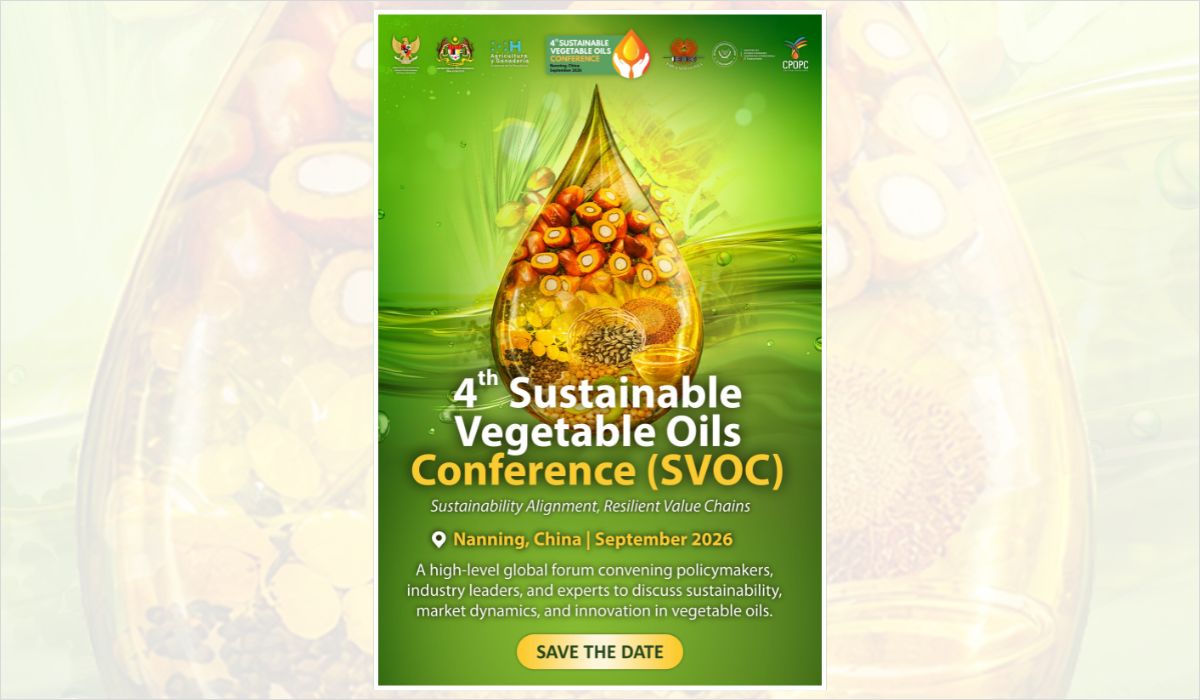
The Sustainable Vegetable Oils Conference (SVOC)
About SVOC
What is SVOC?
• The Sustainable Vegetable Oils Conference (SVOC) is a high-level multilateral dialogue platform initiated by CPOPC.
• SVOC convenes stakeholders across the vegetable oil supply chain including government officials, international organizations, industry leaders, civil society, and researchers to address the global challenges especially related to sustainability, food security, energy transition and trade policy.
Why SVOC?
1. Global supply crisis and food security threats
A combination of factors such as pandemic, extreme weather, geopolitical tensions and biofuel expansion led to global shortages and price surges in vegetable oils, threatening food security worldwide, particularly in developing countries.
2. Strategic role of vegetable oils
Vegetable oils are critical for food, and biofuel sectors, making them central to efforts in tackling climate change and global energy transition, and in achieving the SDGs.
3. Urgent need for sustainable practices
Pressure from regulatory regimes and rising consumer demand for transparency and ethical sourcing create urgency for reform across the supply chain, including smallholder inclusivity.
4. Key strategic alignments
SVOC is strategically aim to align with global momentum and this positioning enhances policy coordination and collective responses.
Objectives of SVOC
1. Develop resilient and sustainable supply chains
Formulate strategies to secure supply and manage price volatility while ensuring environmental sustainability.
2. Promote sustainability and climate action
Advance sustainability frameworks (e.g., ISPO, MSPO, RSPO) and promote digital traceability, and circular economy.
3. Enhance global cooperation
Build a global alliance for vegetable oils that aligns policy, fosters cooperation, and encourages inclusive growth especially for smallholder.
4. Advance innovation and digital transformation
Showcase and promote innovations for sustainable production and transparent supply chain management.
5. Align with global regulatory frameworks
Assess impacts of trade policies/regulations and propose strategies to ensure compliance and maintain global trade flow.
Recent Pressroom