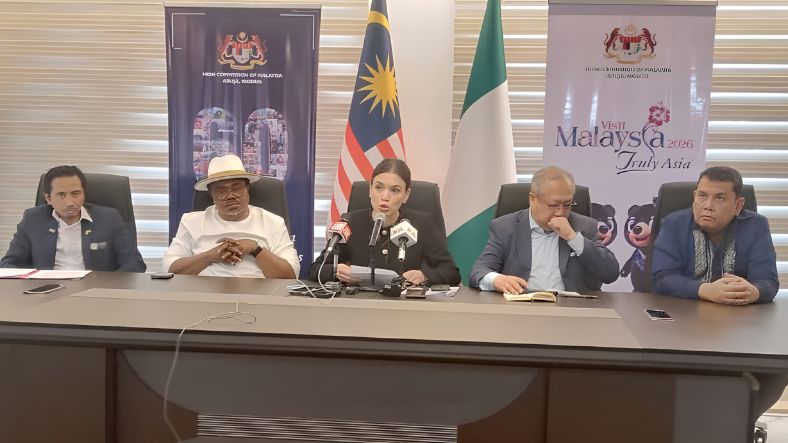
Council, Nigeria to deepen cooperation in palm oil production
The Council of Palm Oil Producing Countries (CPOPC) has pledged to deepen technical and policy cooperation with Nigeria to boost oil palm production, integrate smallholder farmers, and strengthen supply chain alignment.
The CPOPC Secretary-General, Izzana Salleh, disclosed this during an interactive session with journalists on Saturday in Abuja.
She said the engagement formed part of the council’s ongoing mission to Nigeria, aimed at supporting domestic palm oil production and long-term sustainability.
Salleh noted that oil palm is indigenous to West Africa and that Nigeria was once a global leader in palm oil production.
According to her, the focus should not be on the past but on positioning Nigeria strategically for future growth in the sector.
She assured that CPOPC is ready to support Nigeria’s efforts to strengthen domestic production, enhance food security, and build a competitive and sustainable palm oil supply chain.
“Together, producing nations can shape a stronger, more coordinated global voice — one that protects farmer livelihoods, advances food security, and ensures balanced, development-oriented sustainability frameworks,” she said.
Salleh said Nigeria has the history, scale, and opportunity to reclaim its position in global palm oil production.
She disclosed that Nigeria’s palm oil output rose from 1.28 million tonnes in 2020 to 1.57 million tonnes in 2025, while domestic consumption increased from 2.45 million tonnes to 2.61 million tonnes within the same period.
According to her, the resulting supply gap is being filled through imports, leading to foreign exchange losses and missed rural income opportunities.
She added that CPOPC’s mission also includes strengthening South–South cooperation among palm oil–producing countries through experience-sharing based on practical lessons.
Salleh revealed that the council is working towards Nigeria’s recognition as a full member, noting that the country is currently an observer alongside Ghana and Colombia.
She stressed that Nigeria’s leadership in palm oil development would have significant regional implications for Africa’s agricultural voice globally.
CPOPC was founded in 2015 by Indonesia and Malaysia to promote cooperation among producing nations, empower smallholders, advance sustainability, and ensure fair, science-based global dialogue on vegetable oils.
“CPOPC respects Nigeria’s sovereign decision-making process. Our role is not to persuade but to partner,” she said.
Also speaking, National Palm Produce Association of Nigeria President, Dr Alphonsus Inyang, said Nigeria’s membership of CPOPC would expose the country to improved technologies that could enhance its Oil Extraction Ratio (OER).
He added that other benefits include capacity building and access to hybrid inputs to boost productivity among smallholder farmers, who account for the bulk of palm oil production in Nigeria.
NAN
Sumber: dailybytesng.com
Recent News