NO PALM OIL: The deception behind the misleading labels
Widespread "No Palm Oil" labels are misleading and overlook Palm Oil’s industry’s efficiency and sustainability measures. Within a EU's food labelling framework flawed and leading consumers to confusion, it is high time for these deceptive claims to be overcome.
The steadily growing trend of labels on food packaging is intended to help consumers in making informed choices, rather than creating confusion and misleading them. However, a recent special report published by the European Court of Auditors (ECA), titled Food labelling in the EU: Consumers can get lost in the maze of labels, revealed that the gaps in the EU legal framework and the weaknesses in monitoring, reporting, control systems, and sanctions, have led to consumers confronted with confusing and misleading labels.
One such misleading label is the widely used “No Palm Oil” label. The label, associating palm oil with negative allegations on the impacts on health and environment, has been used as a marketing tool despite the lack of science-based evidence supporting the allegations. The weaknesses in monitoring, reporting and control systems, among others, as reported in the special report, have contributed to the growing used of the “No Palm Oil” label.
More importantly, the main food labelling framework of the EU, the regulation on food information to consumers (No. 1169/2011) despite several amendments, failed to address misleading and confusing food labels such as the “No Palm Oil” label. The special report by ECA found that, although the EU legal framework provides for essential food labelling information, 7 out of 11 planned updates have not been completed. As a result, various initiatives have been implemented by Member States to compensate the missing elements, leading to inequity in consumer access to food related information across the EU. However, despite this lack of clarity, the regulation specified that food information should not mislead consumers by suggesting that a common characteristic in a food is something special “in particular by specifically emphasising the presence or absence of certain ingredients and/or nutrients”.
This article will explore the inconvenient truth and provide evidence to counter the misleading “No Palm Oil” label to help consumers in making a healthier and environmentally friendly decisions. This is especially important as we had just celebrated the World Consumer Rights Day on 15 March.
Palm oil is one of the 17 edible oils recognised by the Food and Agriculture Organization (FAO) and World Health Organization (WHO). Credible nutritional studies showed that palm oil does not raise cholesterol levels in the body. Scientific evidences have also confirmed that moderate consumption of palm oil is no worse than other cooking oils. The key, as with any ingredient, is moderation and balance.
Palm oil contains a balanced proportion of saturated fatty acids and unsaturated fatty acids, namely 50% saturated fatty acids, 40% monosaturated fatty acids and 10% polyunsaturated fatty acids. Palm oil is naturally semi-solid at room temperature and therefore, does not require hydrogenation process for use as a solid fat component, avoiding the formation of trans fatty acids. Trans fatty acids have been proven scientifically to have detrimental effects on health and have been limited in the usage in food. In this context, palm oil and palm stearin (the solid fraction of palm oil) are good alternatives to replace trans fatty acids for formulation of trans fatty acids-free food products.
Additionally, palm oil is the only vegetable oil which is a rich source of phytonutrients such as tocotrienols, tocopherol, carotenoids, phytosterols and squalene, among others. Red palm oil, palm oil refined using a milder processing technology, is rich with these phytonutrients which have been proven to be good for health, supported by extensive scientific studies.
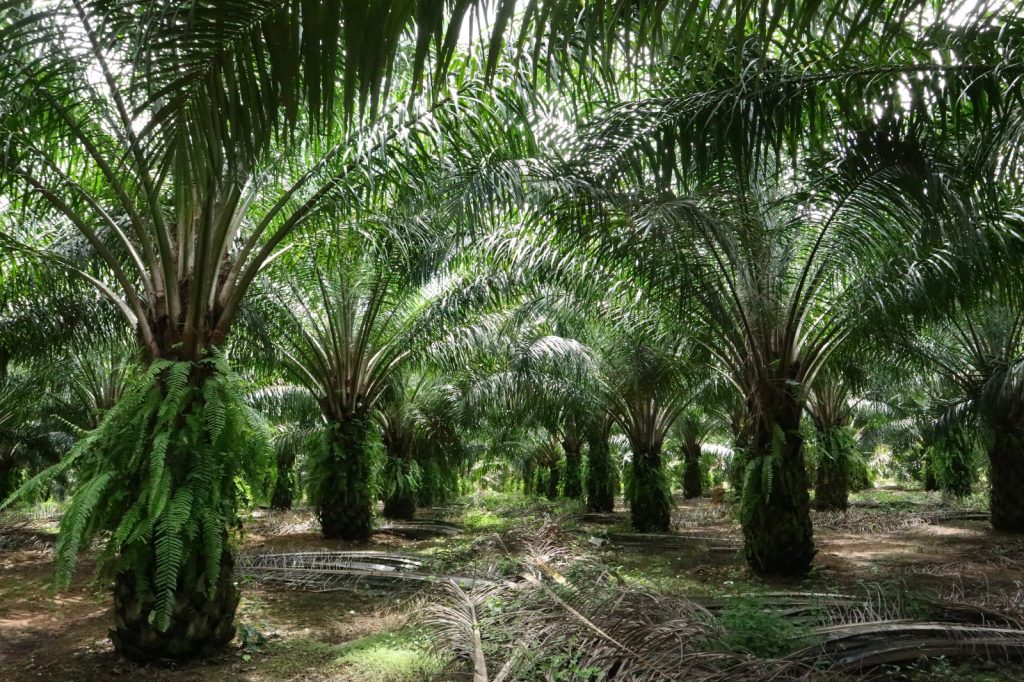
Not only that palm oil is a vital part of the daily life and cultural heritage of many countries, part of the reasons of its growing demand is its land use efficiency. Oil palm trees are perennial crops with an economic life of 25 years. The same amount of land being used for producing one tonne of palm oil would require at least five to eight times the land area required for production of other vegetable oils. This means that if palm oil usage were to be significantly limited and replaced by other vegetable oils, the impacts to biodiversity and ecosystem could be catastrophic.
The cooperation between the governments and stakeholders of the palm oil producing countries through policies and regulations as well as voluntary initiatives play a pivotal role in steering oil palm cultivation into a more sustainable and efficient production, balancing the conservation of forest and biodiversity. In Indonesia and Malaysia, two largest producing countries making up over 80% of the global production of palm oil, mandatory national certification schemes have been implemented, namely the Indonesian Sustainable Palm Oil (ISPO) and Malaysian Sustainable Palm Oil (MSPO), respectively, to ensure that the production in both countries conform to the sustainability requirements.
Palm oil is the only vegetable oil in the world subjected to the most stringent sustainability requirements, unlike other vegetable oils that lack such mandatory schemes. In addition to the mandatory schemes, palm oil is subjected to voluntary certification scheme namely, the Roundtable on Sustainable Palm Oil (RSPO). The “No Palm Oil” label does not take into account the sustainability measures taken by producers, thus disregarding the existence of these practices and creating a disadvantageous generalisation to the whole industry, resulting in the discriminatory labelling against palm oil.
It is important to remember that foods have no inherent virtue. Demonising and assigning moral value to foods rather than focusing on balanced eating, only create confusion among consumers, leading to a misinformed consumption. To truly understand quality of food we consume, we must focus on their ingredients, instead of relying on marketing gimmicks using claims not substantiated by scientific evidence. The real question is: Why emphasise the absence of an ingredient instead of highlighting the presence of beneficial ingredients? So, the next time you see a product with a “No Palm Oil” label, think again – consider what ingredients are being used and whether they offer a healthier or more sustainable alternative.
Sumber: www.euractiv.com
Recent News