PARTNERSHIP BETWEEN COUNCIL OF PALM OIL PRODUCING COUNTRIES (CPOPC) AND SOLIDARIDAD ASIA
Palm oil is one of the main commodities and a global supplier of vegetable oil. As a commodity that is considered the most productive, efficient, and versatile, palm oil is widely used as a base material for both food and non-food products, including in renewable energy. Palm oil, as a commodity, has also been proven to play a significant role in poverty alleviation. The palm oil sector contributes the most on achieving the UN Sustainable Development Goals.
In the effort of promoting awareness on the importance of implementing sustainable principles based on sustainable palm oil production, palm oil producers adopt sustainability principles. Several sustainability standards have been issued by palm oil-producing governments such as the Indonesian Sustainable Palm Oil (ISPO) and Malaysian Sustainable Palm Oil (MSPO). India, one of the largest consumers of palm oil, has the Indian Palm Oil Sustainability Framework (IPOS) which supports sustainable palm oil trade.
The main market for Indonesia and Malaysia palm oil is the European Union countries. However, the European Union recently issued the European Union Deforestation-free Regulation (EUDR). The EUDR is a regulation from European Union to enforce the due diligence obligation on seven agricultural and forestry commodities, including palm oil. This regulation aims to prove that goods entering the EU market are free from deforestation[1]. The implementation of this regulation may harm the independent palm oil farmers in Indonesia and Malaysia. Independent palm oil farmers in Indonesia, for instance, contribute to approximately 40% of the total palm oil area[2]. With this regulation, the EU expects land geolocation and classification system of producing countries with the categories high, standard, and low risk. The Council of Palm Oil Producing Countries (CPOPC) views this as stigmatizing and discriminatory.
This policy seems to diminish all the efforts of palm oil-producing governments that have committed in addressing climate change and biodiversity protection issues, as agreed in the Paris Agreement. Meanwhile, CPOPC member countries have also strictly implemented various forest conservation policies that have successfully reduced deforestation and forest fires.
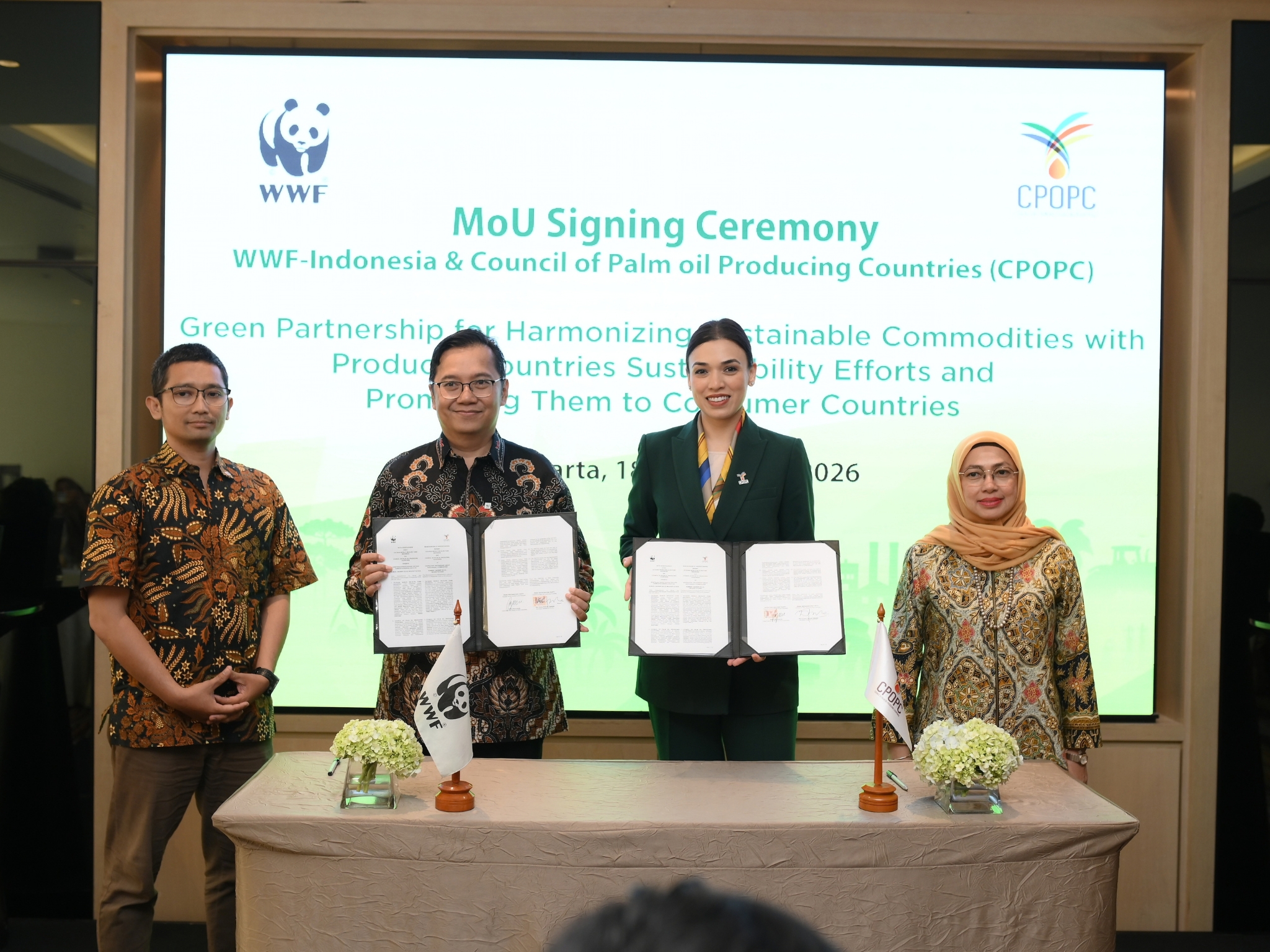
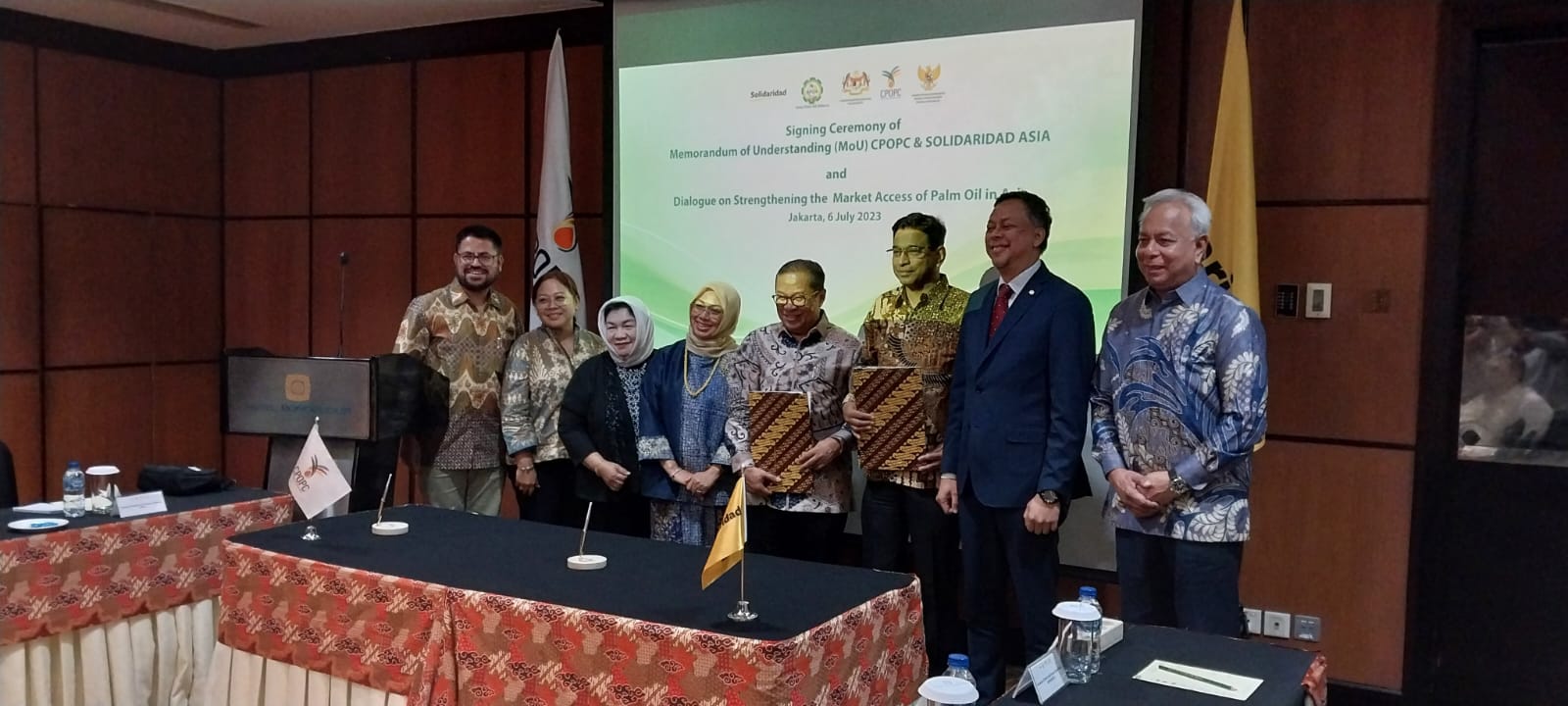
Palm oil-producing countries call for the understanding between CPOPC member countries and consumer countries regarding the efforts done by the producer countries in producing sustainable palm oil production. This call is embodied in the signing of Memorandum of Understanding between Dr. Rizal Affandi Lukman, the Secretary General of CPOPC, and Dr. Shatadru Chattopadhayay, the Managing Director of Solidaridad Asia, witnessed by several ministries of the Republic of Indonesia including the Coordinating Ministry for Economic Affairs, Ministry of Trade, Ministry of Agriculture, Ministry of Industry, as well as the Ministry of Plantation and Commodities of Malaysia on 6 July 2023 in Jakarta. This Memorandum of Understanding marks the collaboration between CPOPC and Solidaridad Asia, which covers the good agricultural practices for smallholders, developing standard sustainability infrastructure, supporting the establishment of regulations that are smallholder-friendly, as well as joint communication activities.
This Memorandum of Understanding is expected to further strengthen the partnership and cooperation between CPOPC and Solidaridad Asia, which have been established with the aim of strengthening market access for member countries of CPOPC, and at the same time ensuring the well-being of independent palm oil farmers.
The Council of Palm Oil Producing Countries (CPOPC) is an intergovernmental organization for palm oil-producing countries. The council was formed on 21 November 2015, due to the awareness of the need for mutually beneficial cooperation among palm oil producing countries.
Solidaridad is an international civil society organization with over 50 years of experience in developing solution to create resilient communities in the face of climate change and sustainability. Currently, Solidaridad operates in more than 40 countries across five continents, through seven independently monitored regional offices.
[1] https://kemlu-go-id.translate.goog/portal/en/read/4587/berita/ministry-of-foreign-affairs-communicates-diplomacy-efforts-on-eu-deforestation-regulation?_x_tr_sl=en&_x_tr_tl=id&_x_tr_hl=id&_x_tr_pto=tc
[2] https://spks.or.id/detail-publikasi-luas-areal-perkebunan-sawit-di-indonesia-capai-1638-juta-hektare
Recent Pressroom