Malaysia, Indonesia to send palm oil mission to EU next week
KUALA LUMPUR -- Malaysia and Indonesia are sending a "very crucial" mission to Brussels next week to argue against the European Union's new deforestation regulation, which will likely impact the Southeast Asian nations' agriculture sector.
Ministers from the countries, the world's biggest exporters of palm oil, have criticized the rule as harmful to small farmers.
The European Union Deforestation Regulation (EUDR) was introduced last year to prevent EU sales of palm oil, soy, coffee, cocoa, rubber, timber and beef that was raised on land deforested after 2020. Under the new regulation, all companies involved in the trade of these products and their derivatives must adhere to strict due diligence requirements when exporting to or selling within the EU. The requirements include providing traceability and geolocation information.
icials earlier said the regulation would not affect palm oil produced by smallholders under Felda, Malaysia's state-run palm oil producer, given that since 1990 the company had not cleared any forests to open new plantations.
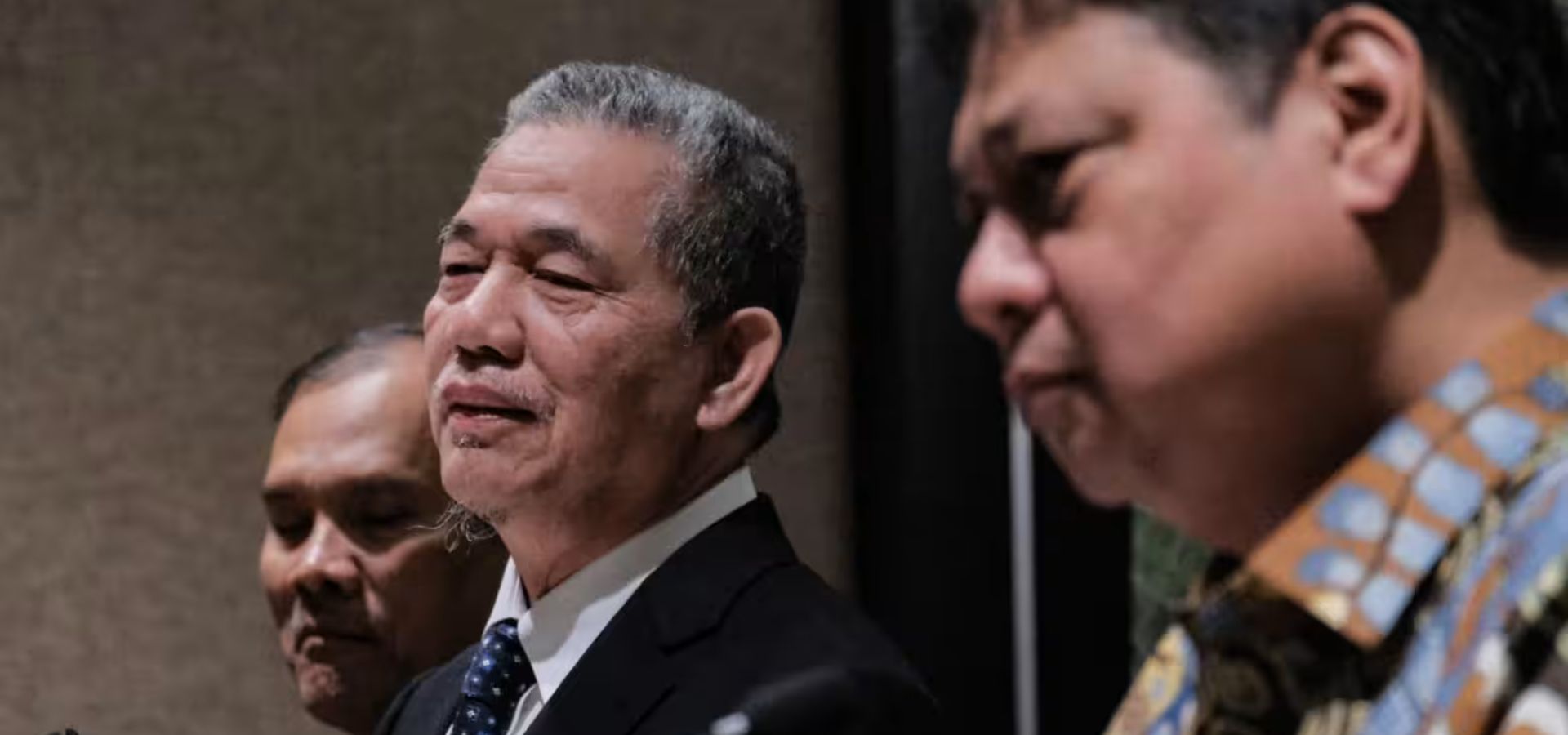
Malaysian Deputy Prime Minister Fadillah Yusof, who is also the commodities and plantations minister, last week said the country's small farmers and their families depend on exports of palm oil, rubber and other agricultural commodities. The regulation places a stumbling block in front of small farmers seeking access to the European market, and might reduce household incomes, increase poverty and harm rural communities, Fadillah said.
"What is more important is to send a strong message to address poverty issues," he said. "Whatever actions taken by the EU without negotiating or without engaging with us will definitely implicate or impact the smallholders."
Fadillah was speaking on May 17 at a joint news conference after the 11th Ministerial Meeting of the Council of Palm Oil Producing Countries (CPOPC) in Kuala Lumpur.
During the meeting, Airlangga Hartarto, Indonesia's coordinating minister for economic affairs, pointed his finger at the EU, saying "[You] cannot impose your standard, and you cannot say that your standard is superior to others'."
The Malaysian-Indonesian delegation is expected to make its case to the European Commission on Tuesday and Wednesday. Fadillah and Hartarto will meet Frans Timmermans, vice president of the European Commission, and Virginijus Sinkevicius, EU commissioner for the environment, oceans and fisheries.
In stressing the "very crucial" nature of the mission for both Indonesia and Malaysia, Fadillah said, "What we need is clarity in terms of not only the rules and regulation but also guidelines when they're saying that smallholders are not impacted or affected."
Singling out the traceability requirement, Fadillah wondered, "What will be the formula that they're doing? What are the mechanisms that they're going to do all that, the auditing process and so on?"
Indonesia and Malaysia together account for more than 85% of the world's palm oil production, and the EU is the third-largest importer of Malaysian palm oil, according to the Malaysian Palm Oil Council. In 2022 the European bloc imported 1.47 million tonnes of palm oil worth 8 billion ringgit ($1.8 billion).
Meanwhile, Michalis Rokas, the EU's ambassador to Malaysia, has dismissed allegations that the EUDR is aimed at protecting the EU's vegetable oil market.
The "EUDR is not a trade protection measure but purely an environmental law to fight climate change," Rokas said on May 10 during an engagement session organized by the EU Mission to Malaysia and Foreign Correspondents Club Malaysia (FCCM).
Rokas noted that the regulation would not hinder Malaysian palm oil's competitiveness, saying the amount of oilseeds going from Malaysia to the EU "has been steady" in recent years. He emphasized that any export declines are not due to the deforestation regulation but rather because the global market is still reeling from the COVID-19 pandemic.
Recent Pressroom