
CPOPC Mission to Karachi Highlights Asia’s Central Role in the Palm Oil Industry
Karachi, Pakistan – The Council of Palm Oil Producing Countries (CPOPC) successfully concluded its mission to Karachi, reaffirming its commitment to strengthening cooperation with Pakistan as one of Asia’s most strategic palm oil consuming markets. The mission underscored the growing importance of Asia in shaping global palm oil demand, market stability, and food security, while reinforcing long-standing partnerships between producing and consuming countries.
During the visit, the CPOPC delegation engaged with key stakeholders across government, industry, and diplomatic circles to exchange views on market dynamics, supply-chain resilience, and the evolving global landscape affecting edible oils. Discussions highlighted Pakistan’s vital role as one of the world’s leading palm oil importers and its increasing influence in regional trade flows, particularly as demand shifts decisively toward Asia.
A key highlight of the mission was the participation of CPOPC Secretary General, Madam Izzana Salleh, as a speaker at the 8th Pakistan Edible Oils Conference (PEOC 2026). In her presentation, the Secretary General underscored Pakistan’s strategic importance in the global palm oil ecosystem, emphasizing that the country is no longer a passive importing market but a key actor shaping demand, stability, and long-term market direction. “Pakistan is not merely an importing market with around 4.3% of global palm oil consumption but it is now a strategic partner shaping price stability, food security, and the future of palm oil in Asia.” CPOPC SG noted that Pakistan imports approximately 3.3 million tonnes of palm oil annually for domestic consumption, placing the country among the world’s largest importers alongside India and China.
SG’s presentation also reflected the growing collective weight of Asia in shaping the future of global food and commodity markets. With India (18%), China (11%), and Pakistan (9%) alone accounting for nearly 40% of global palm oil imports, Asia now represents the dominant share of global demand, far surpassing the combined share of traditional markets such as the European Union. This shift underscores the increasing role of Asian economies not only as consumers, but as co-shapers of global market stability, trade flows, and sustainability pathways, particularly for essential food commodities such as edible oils.
The Secretary General further highlighted palm oil’s essential role in Pakistan’s food system, where it contributes significantly to household affordability, supports small and medium-sized food processors, and stabilizes the country’s edible oil basket amid global volatility. The Secretary General stressed that palm oil plays a critical role in Pakistan’s food security and affordability, supplying over 50% of the country’s edible oil needs and accounting for around 70–75% of total edible oil consumption, particularly in ghee and cooking oil. “Palm oil supplies over half of Pakistan’s edible oil needs and remains the most affordable option for households and food manufacturers. Any disruption in supply directly affects food security and economic stability.” CPOPC SG noted palm oil is essential for households and food manufacturers, especially in a price-sensitive market like Pakistan where SMEs contribute nearly 40% of GDP and 25% of exports.
Addressing sustainability, the Secretary General emphasised a shift from compliance to contribution, noting that sustainability must support, not undermine, food security and supply reliability in importing countries such as Pakistan. While certified sustainable palm oil now represents more than 20% of global supply, she highlighted the need for inclusive approaches that recognise progress under national standards and support smallholders, rather than creating new trade frictions. In this context, Pakistan’s long-standing partnership with producing countries, spanning more than five decades, demonstrates how sustainability, affordability, and market stability can advance together when built on mutual trust and transparency.
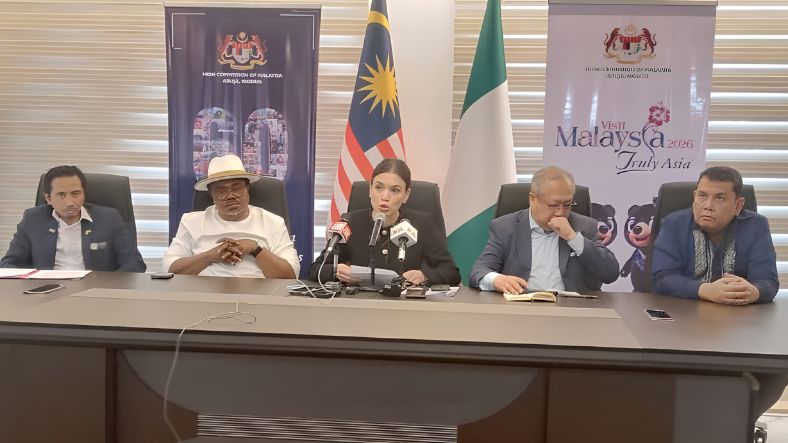
As part of the mission, the CPOPC delegation paid courtesy visits to the Indonesian and Malaysian diplomatic missions in Karachi, reflecting the strong alignment between producing countries and their shared engagement with Pakistan. During the courtesy visit to the Ambassador of the Republic of Indonesia to Pakistan, Chandra W Sukotjo, and the Consul General of Indonesia in Karachi, Muzakir, and the Consul General of Malaysia in Karachi, Herman Hardynata Ahmad, discussions focused on strengthening cooperation with palm oil stakeholders, addressing misinformation surrounding palm oil and climate issues, and reinforcing Pakistan’s strategic importance as a long-term market.
The CPOPC mission to Karachi reaffirmed the Council’s commitment to strengthening partnerships with Pakistan through open dialogue, policy alignment, and collaborative initiatives. During the mission, CPOPC also formally introduced Pakistan’s #YoungElaeis Ambassador, Muhammad Awais Shahid, to key industry stakeholders, highlighting the growing engagement of Pakistani youth in advancing informed and constructive dialogue on palm oil.
Through his digital content, Awais demonstrates how young voices are engaging public audiences with data and science, rather than slogans. In one of his videos, he explains the nutritional properties of red palm oil, including its naturally high beta-carotene content, which the body converts into vitamin A. His work reflects a broader shift in how younger stakeholders are shaping informed, fact-based dialogue on palm oil illustrating that this movement is driven not only by institutions, but by youth themselves seeking credible knowledge and transparency.
Sumber: CPOPC.net
Recent News